LLLT Therapy Device

Understanding LLLT Device Technology and Mechanisms
Low-Level Laser Therapy, also known as photobiomodulation therapy, utilizes specific wavelengths of light to stimulate cellular function. Unlike high-power lasers used for cutting or ablation, LLLT devices operate at lower power outputs that generate beneficial photochemical effects without producing heat or tissue damage.
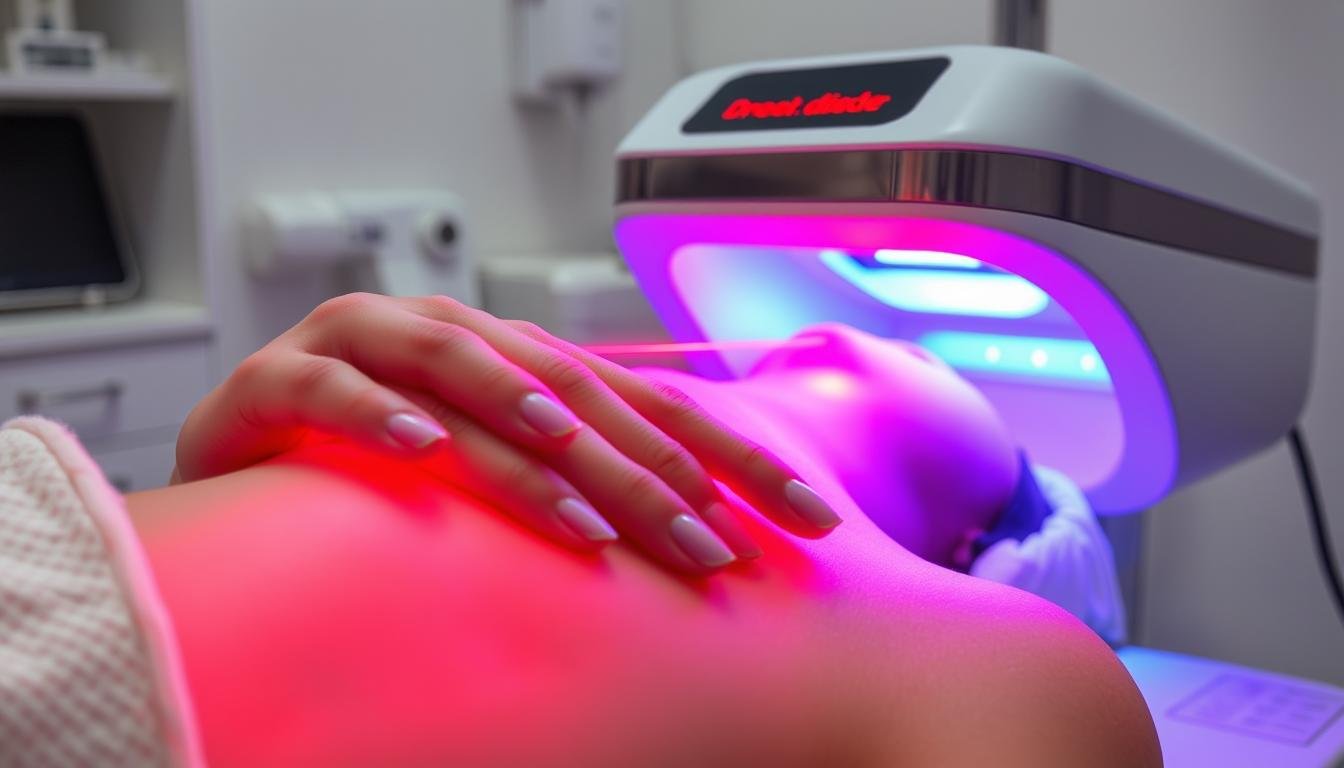
LLLT Device delivering therapeutic light energy during a clinical treatment
How LLLT Devices Work at the Cellular Level
The primary mechanism of action for LLLT devices involves photon absorption by

cellular chromophores, particularly cytochrome c oxidase in mitochondria. This interaction triggers several biological responses:
- Increased ATP production, enhancing cellular energy availability
- Stimulation of mitochondrial respiratory chain
- Release of nitric oxide, improving blood flow
- Modulation of reactive oxygen species
- Activation of transcription factors that influence protein synthesis
Key LLLT Device Parameters for Optimal Therapeutic Effects
The efficacy of LLLT devices depends on several critical parameters that healthcare professionals should understand:
| Parameter | Optimal Range | Clinical Significance |
| Wavelength | 630-850 nm | Red and near-infrared light penetrates tissue effectively and stimulates cellular response |
| Power Density | 5-50 mW/cm² | Sufficient energy delivery without thermal effects |
| Energy Density | 1-10 J/cm² | Total energy delivered to tissue for therapeutic effect |
| Treatment Duration | 30 seconds – 10 minutes | Varies by condition and device specifications |
| Pulsing vs. Continuous | Condition-dependent | Pulsed delivery may enhance certain therapeutic effects |
Evidence-Based Clinical Applications of LLLT Devices
The therapeutic applications of LLLT devices span numerous medical specialties, with growing clinical evidence supporting their efficacy across various conditions.
Pain Management and Musculoskeletal Applications
One of the most well-established uses of LLLT devices is in pain management and musculoskeletal rehabilitation:
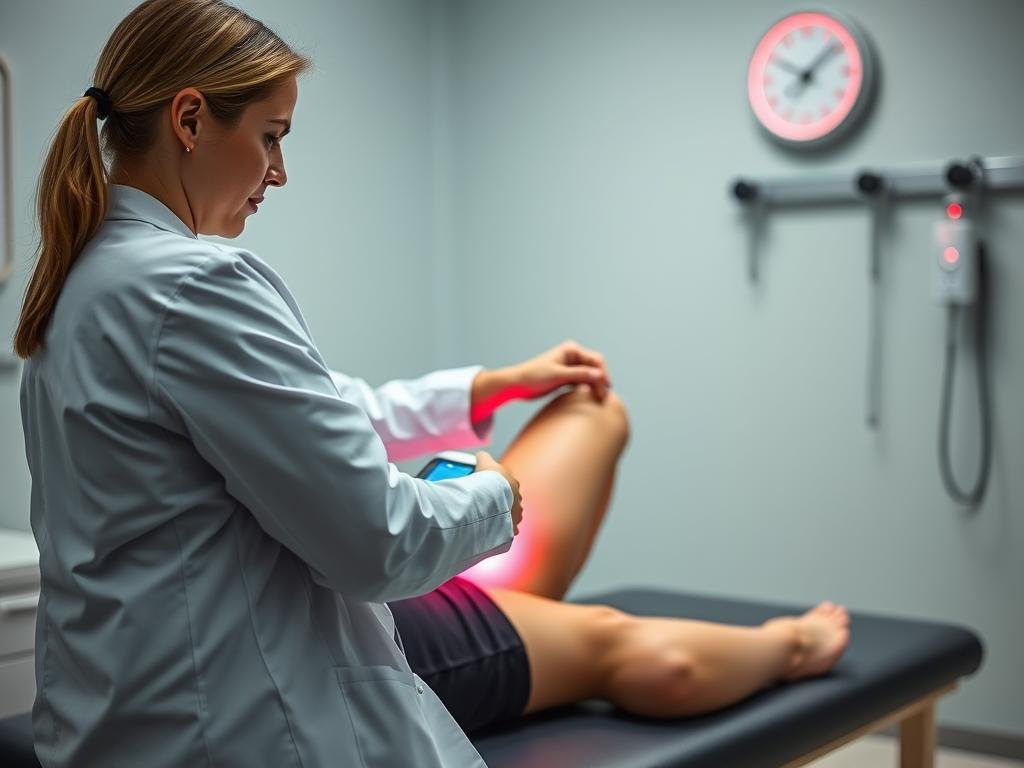
LLLT treatment for knee pain in clinical setting
- Chronic neck and back pain reduction (FDA-cleared application)
- Arthritis symptom management
- Tendinopathies and soft tissue injuries
- Post-surgical pain and inflammation
- Temporomandibular joint disorders
- Fibromyalgia symptom relief
“Clinical studies demonstrate that LLLT devices can reduce pain scores by 30-50% in chronic musculoskeletal conditions when applied with appropriate parameters and treatment protocols.”
Dermatological and Wound Healing Applications
LLLT devices have shown significant promise in dermatology and wound management:
- Accelerated wound healing in diabetic ulcers
- Reduced scarring and improved tissue repair
- Management of inflammatory skin conditions
- Hair regrowth for androgenetic alopecia
- Acne treatment (particularly with blue/red light combinations)
- Photorejuvenation and collagen stimulation
Neurological and Psychological Applications
Emerging research supports the use of LLLT devices in neurological conditions:
- Traumatic brain injury rehabilitation
- Stroke recovery support
- Neuropathic pain management
- Cognitive function improvement
- Depression and seasonal affective disorder
Expand Your Practice with MAIKONG LLLT Devices
Offer your patients the latest in evidence-based light therapy with MAIKONG’s comprehensive range of professional-grade LLLT devices. Contact us to learn about our distributor program.
Clinical Research Supporting LLLT Device Efficacy
The therapeutic benefits of LLLT devices are supported by a growing body of clinical research, with numerous studies demonstrating positive outcomes across various applications.
Key Clinical Studies on LLLT Device Effectiveness
Several high-quality clinical trials have validated the efficacy of LLLT devices:
| Study | Condition | Key Findings |
| Chow et al. (2009) | Chronic Neck Pain | Systematic review of 16 RCTs showed significant pain reduction with LLLT compared to placebo |
| Bjordal et al. (2006) | Osteoarthritis | Meta-analysis demonstrated significant pain reduction and improved function in knee osteoarthritis |
| Hegedus et al. (2009) | Diabetic Foot Ulcers | LLLT treatment accelerated wound healing by 79% compared to conventional therapy alone |
| Lanzafame et al. (2014) | Androgenetic Alopecia | LLLT helmet device produced 35% increase in hair count after 16 weeks |
| Naeser et al. (2014) | Traumatic Brain Injury | Improvements in cognitive function and reduction in PTSD symptoms with transcranial LLLT |
Meta-Analyses and Systematic Reviews
Comprehensive reviews of LLLT device research provide strong evidence for clinical efficacy:
- The Lancet (2009) systematic review found LLLT effective for neck pain with moderate to strong evidence
- Cochrane Database review (2015) confirmed LLLT benefits for rheumatoid arthritis
- BMJ Open (2019) meta-analysis demonstrated significant efficacy for tendinopathies
- Journal of Photochemistry and Photobiology (2018) review validated LLLT for wound healing applications
Comparative efficacy of LLLT devices across various clinical applications
MAIKONG LLLT Device Solutions for Healthcare Professionals
MAIKONG offers a comprehensive range of professional-grade LLLT devices designed to meet the diverse needs of healthcare practices. Our products combine cutting-edge technology with user-friendly design and cost-effective pricing.
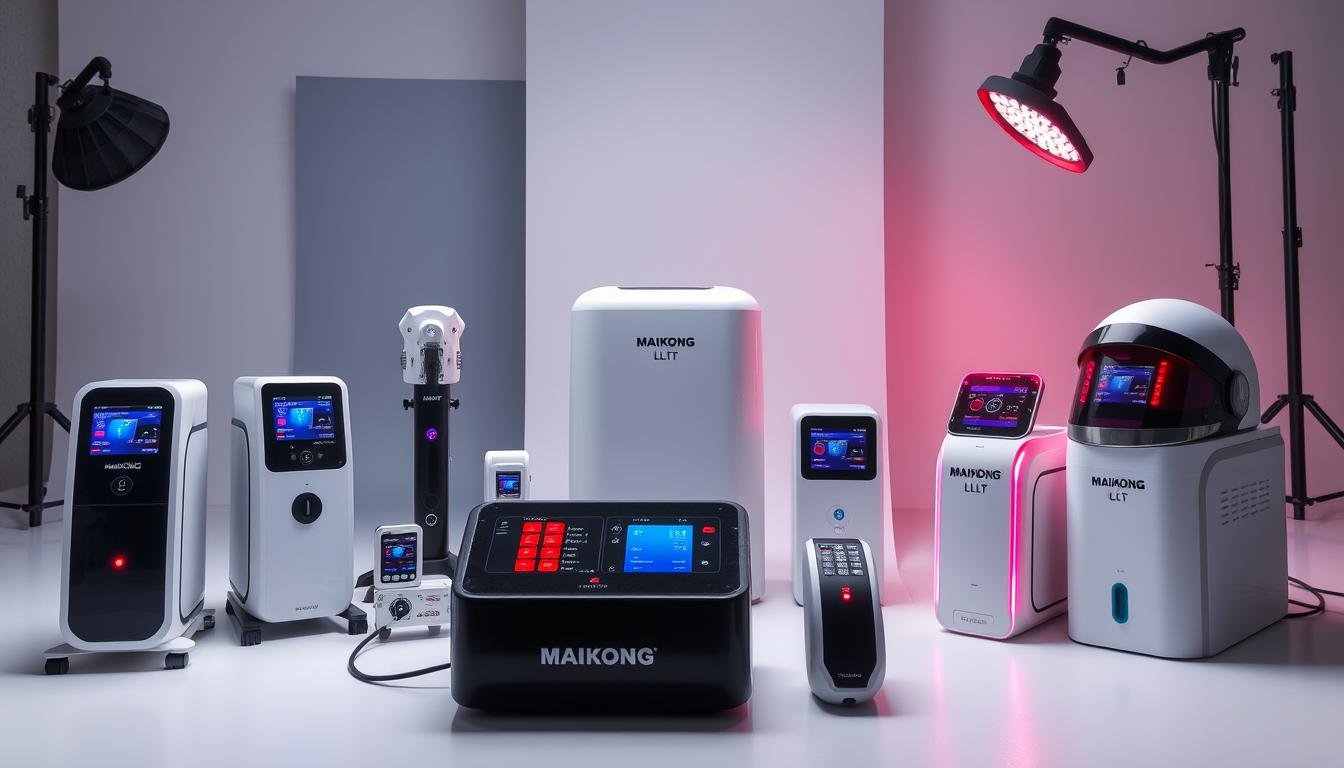
MAIKONG’s comprehensive range of professional LLLT devices
Professional LLLT Device Categories
LLLT Laser Therapy Devices
Professional-grade handheld and stationary laser units for targeted therapy with precise control over treatment parameters.
Clinical Grade
Red Light Therapy Beds
Full-body treatment systems for comprehensive therapy sessions, ideal for clinics offering comprehensive light therapy services.
Full-Body Treatment
LLLT Helmet Systems
Specialized devices for neurological applications and hair restoration treatments with optimized wavelengths.
Specialized Treatment
LLLT Clothing Devices
Wearable therapy solutions for targeted treatment of larger body areas with consistent light delivery.
Wearable Technology
LLLT Home Devices
Professional-recommended systems for patient at-home use, extending clinical benefits between office visits.
Patient Use
LLLT Masks & Combs
Specialized facial and scalp treatment devices for dermatological and hair restoration applications.
Targeted Therapy
Key Advantages of MAIKONG LLLT Devices
MAIKONG Advantages
- FDA-registered devices with comprehensive safety profiles
- Precise wavelength delivery (630-850nm) for optimal therapeutic effect
- Adjustable power settings for customized treatment protocols
- User-friendly interfaces requiring minimal training
- Durable construction with 2-year manufacturer warranty
- Competitive pricing with excellent ROI potential
- Comprehensive training and clinical support
Become a MAIKONG Distributor
Join our network of healthcare professionals offering high-quality, cost-effective LLLT devices. Exclusive distributor pricing and territories available.
Implementing LLLT Devices in Clinical Practice
Successfully integrating LLLT devices into your healthcare practice requires strategic planning, proper training, and appropriate patient selection.
Practice Integration Strategies for LLLT Devices
Consider these key factors when implementing LLLT device therapy in your practice:
- Staff training on device operation and treatment protocols
- Patient education materials explaining LLLT benefits and expectations
- Treatment room setup with appropriate space and electrical requirements
- Integration with existing treatment modalities and patient flow
- Documentation systems for tracking treatments and outcomes
- Marketing strategies to promote new LLLT services
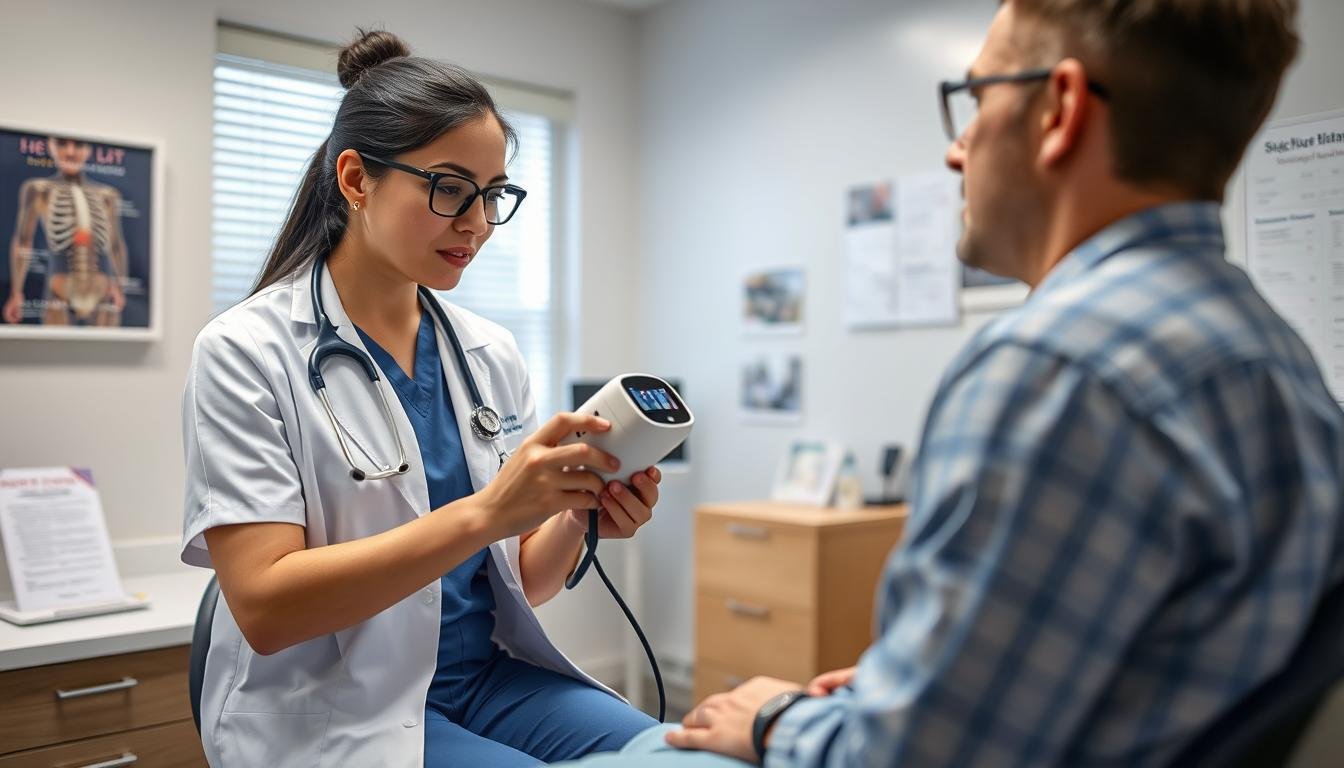
Patient education is crucial for successful LLLT device implementation
Treatment Protocols and Best Practices
Effective LLLT device therapy relies on evidence-based protocols:
| Condition | Recommended Protocol | Expected Outcomes |
| Chronic Low Back Pain | 2-3 treatments weekly for 4-6 weeks, 4-6 J/cm² per point | 30-50% pain reduction, improved mobility |
| Osteoarthritis (Knee) | 2 treatments weekly for 6-8 weeks, 4-8 J/cm² per point | Reduced pain, improved function, decreased medication use |
| Tendinopathy | 3 treatments weekly for 3-4 weeks, 2-4 J/cm² per point | Reduced inflammation, accelerated healing, improved function |
| Diabetic Ulcers | 3-5 treatments weekly, 4-8 J/cm² per cm² of wound area | Accelerated healing, reduced infection risk |
| Hair Loss | 3 treatments weekly for 16 weeks, 4 J/cm² to scalp | Increased hair count, improved hair thickness |
Patient Selection and Contraindications
While LLLT devices have excellent safety profiles, certain considerations are important:
Ideal Candidates
- Patients with chronic musculoskeletal pain
- Those seeking non-pharmaceutical pain management
- Individuals with slow-healing wounds
- Early to moderate androgenetic alopecia
- Patients with mild to moderate skin concerns
Contraindications
- Direct application over cancerous lesions
- Treatment over the thyroid gland
- Pregnancy (precautionary)
- Photosensitizing medications
- Recent steroid injections in treatment area
Return on Investment for LLLT Device Implementation
Investing in LLLT devices for your practice can provide significant financial returns while expanding your treatment offerings.
Financial Considerations for LLLT Device Acquisition
| Investment Factor | Considerations |
| Initial Equipment Cost | MAIKONG devices offer competitive pricing with options starting at $1,500 for professional units |
| Treatment Room Setup | Minimal requirements – standard treatment room with electrical outlet |
| Staff Training | Comprehensive training provided with purchase; intuitive operation |
| Maintenance Costs | Low maintenance with 2-year warranty; minimal consumables |
| Treatment Pricing | Average market rate: $50-150 per session depending on application |
Revenue Potential and Break-Even Analysis
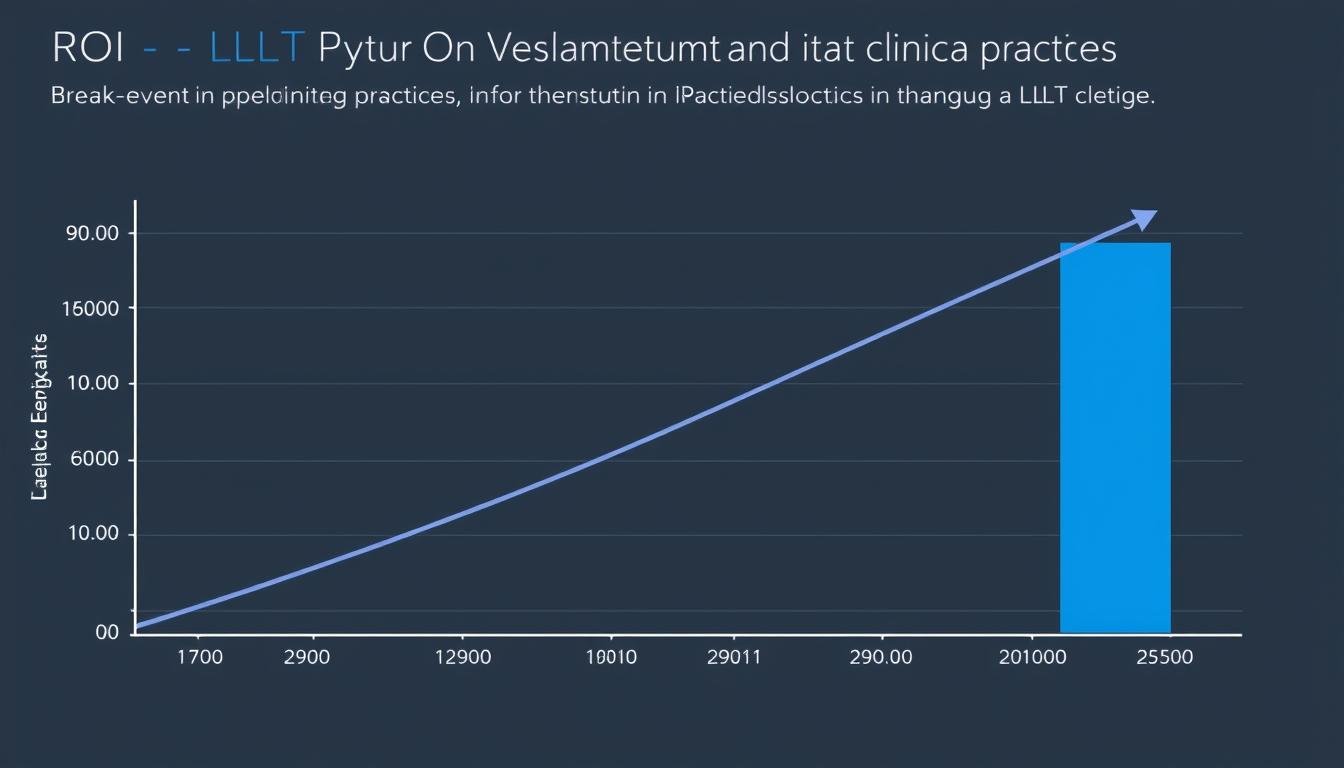
Typical ROI timeline for MAIKONG LLLT device implementation
A typical professional practice can expect to break even on their LLLT device investment within 3-6 months based on the following assumptions:
- Average of 10-15 LLLT treatments per week
- Treatment pricing of $75-100 per session
- Minimal additional costs per treatment
- Increased patient retention and referrals
- Potential for package pricing and maintenance plans
Request a Customized ROI Analysis
Our team can provide a detailed return on investment projection based on your specific practice parameters and patient demographics.
Clinical Case Studies: LLLT Device Applications
The following case studies demonstrate the practical application and outcomes of LLLT device therapy in various clinical scenarios.
Case Study 1: Chronic Low Back Pain
Patient Profile: 52-year-old male with 7-year history of chronic low back pain following workplace injury
Previous Treatments: Physical therapy, NSAIDs, muscle relaxants with limited relief
LLLT Protocol: MAIKONG laser therapy device, 8 J/cm² at 6 points along lumbar spine, 2x weekly for 6 weeks
Outcome: 65% reduction in pain scores, 70% reduction in medication use, return to normal activities
Case Study 2: Diabetic Foot Ulcer
Patient Profile: 64-year-old female with Type 2 diabetes and non-healing plantar ulcer (3 months duration)
Previous Treatments: Standard wound care with minimal improvement
LLLT Protocol: MAIKONG targeted therapy device, 6 J/cm² to wound bed and periwound area, 3x weekly
Outcome: Complete wound closure at 5 weeks, improved peripheral circulation
Case Study 3: Androgenetic Alopecia
Patient Profile: 38-year-old male with Norwood-Hamilton stage 3 vertex hair loss
Previous Treatments: Topical minoxidil with limited results
LLLT Protocol: MAIKONG LLLT helmet, 4 J/cm² to scalp, 3x weekly for 16 weeks
Outcome: 43% increase in terminal hair count, improved hair thickness and patient satisfaction
Case Study 4: Knee Osteoarthritis
Patient Profile: 71-year-old female with moderate bilateral knee osteoarthritis
Previous Treatments: NSAIDs, corticosteroid injections with diminishing relief
LLLT Protocol: MAIKONG therapy device, 6 J/cm² at 8 points around each knee joint, 2x weekly for 8 weeks
Outcome: 58% pain reduction, 45% improved function, delayed need for surgical intervention
Frequently Asked Questions About LLLT Devices
What distinguishes LLLT devices from other light-based therapies?
LLLT devices utilize specific wavelengths (typically 630-850nm) at low power densities to produce photochemical rather than thermal effects. Unlike high-power lasers used for cutting or ablation, LLLT operates below the thermal threshold to stimulate cellular function without tissue damage. This contrasts with other light therapies like Intense Pulsed Light (IPL) or photodynamic therapy, which have different mechanisms and applications.
How many treatment sessions are typically required to see results with LLLT devices?
Treatment protocols vary by condition, but most applications require multiple sessions. Acute conditions may respond in 4-6 sessions, while chronic conditions typically require 10-15 sessions for optimal results. Hair restoration protocols generally require 16+ weeks of consistent treatment. Many patients report some improvement after 3-4 sessions, with maximum benefits achieved after completing the full recommended protocol.
Are there any side effects associated with LLLT device treatments?
LLLT devices have excellent safety profiles with minimal side effects when used properly. Temporary mild redness at the treatment site may occur due to increased circulation. Some patients report slight tingling sensations during treatment, which typically resolves immediately. There are no known long-term adverse effects from properly administered LLLT. The non-thermal, non-invasive nature of the therapy contributes to its favorable safety profile.
How do MAIKONG LLLT devices compare to competitors in terms of quality and effectiveness?
MAIKONG LLLT devices are engineered to deliver precise wavelengths and power densities for optimal therapeutic effect. Our devices undergo rigorous quality control and are manufactured according to international standards. Compared to competitors, MAIKONG offers superior value through competitive pricing without compromising on quality or effectiveness. Our devices feature medical-grade components, user-friendly interfaces, and comprehensive warranty coverage, making them an excellent investment for healthcare practices.
Can LLLT devices be used in conjunction with other treatments?
LLLT devices work excellently as both standalone treatments and complementary therapies. They can enhance the effectiveness of manual therapies, exercise programs, and certain medications. LLLT can be safely combined with ultrasound, electrical stimulation, and therapeutic exercise in rehabilitation settings. For dermatological applications, LLLT can complement topical treatments and other non-invasive procedures. The non-invasive nature of LLLT makes it an ideal adjunct to many existing treatment protocols.
Have More Questions About LLLT Devices?
Our team of specialists is available to answer your specific questions about MAIKONG LLLT devices and how they can benefit your practice.
Conclusion: The Future of LLLT Devices in Healthcare
As research continues to validate the efficacy of low-level laser therapy across an expanding range of applications, LLLT devices are positioned to become essential tools in modern healthcare practices. The non-invasive nature, excellent safety profile, and growing evidence base make LLLT an attractive option for both practitioners and patients seeking effective alternatives to traditional interventions.
MAIKONG is committed to advancing LLLT technology through continued innovation, research collaboration, and practitioner education. By partnering with healthcare professionals as distributors, we aim to expand access to high-quality, cost-effective LLLT devices that can significantly enhance patient outcomes across multiple specialties.
Whether you’re looking to add LLLT devices to your existing practice or expand your current light therapy offerings, MAIKONG provides the comprehensive support, clinical training, and quality products needed for successful implementation.
Become a MAIKONG Distributor Today
Join our growing network of healthcare professionals offering premium LLLT devices at competitive prices. Exclusive territories available.
Copy©2025