LLLT Therapy Device

The Accidental Discovery of LLLT Effects on Hair Growth
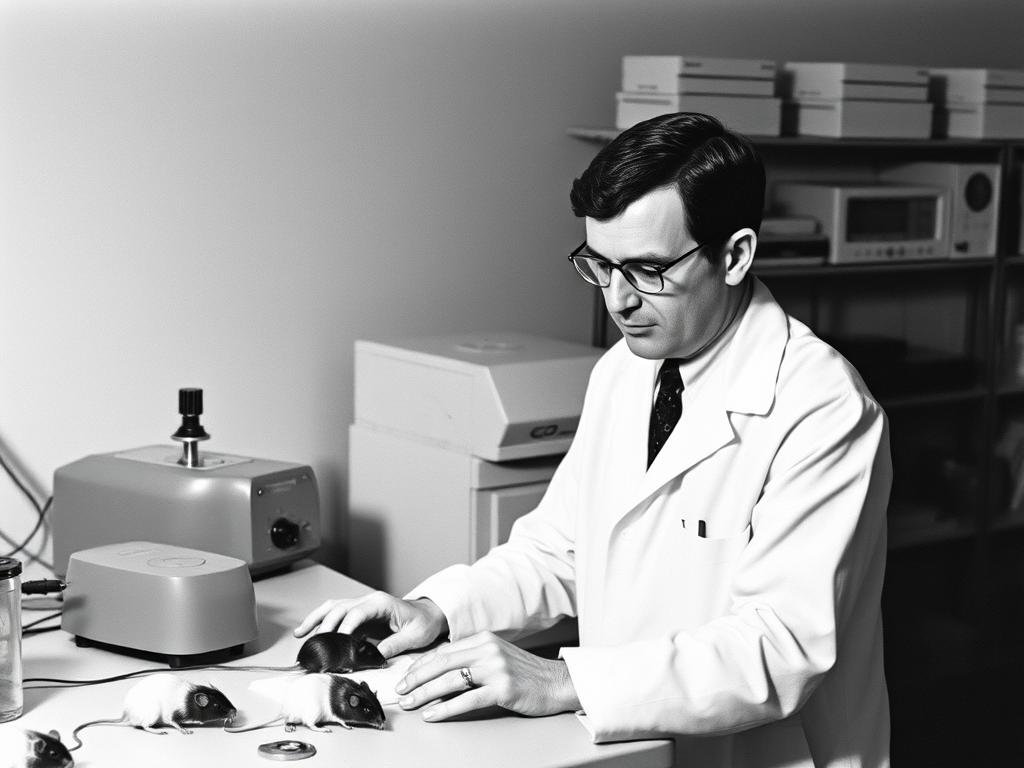
The story of LLLT begins not with hair, but with wounds. In 1967, Hungarian physician Endre Mester was attempting to replicate an experiment testing if laser radiation might cause cancer in mice. After shaving the test subjects and exposing them to a low-powered ruby laser, he made an unexpected observation that would change the course of medical history.
Dr. Endre Mester conducting the first LLLT experiment that accidentally discovered its effects on hair growth (1967)
Instead of developing tumors, the mice experienced something remarkable – their hair grew back more quickly than the control group. This serendipitous finding marked the birth of what would eventually be termed “photobiomodulation” or low-level laser therapy. Mester had unwittingly discovered that certain wavelengths of light at specific intensities could stimulate cellular activity and promote tissue regeneration.
Mester published his findings in 1968, noting that the laser exposure appeared to enhance biological processes rather than damage tissues. While his initial focus shifted to wound healing applications, this accidental discovery laid the groundwork for future exploration of LLLT in hair restoration.
Early Research and Development (1970s-1980s)
Following Mester’s discovery, the 1970s and 1980s saw gradual exploration of low-level laser effects on biological tissues. During this period, researchers primarily focused on understanding the fundamental mechanisms behind photobiomodulation rather than specific hair growth applications.
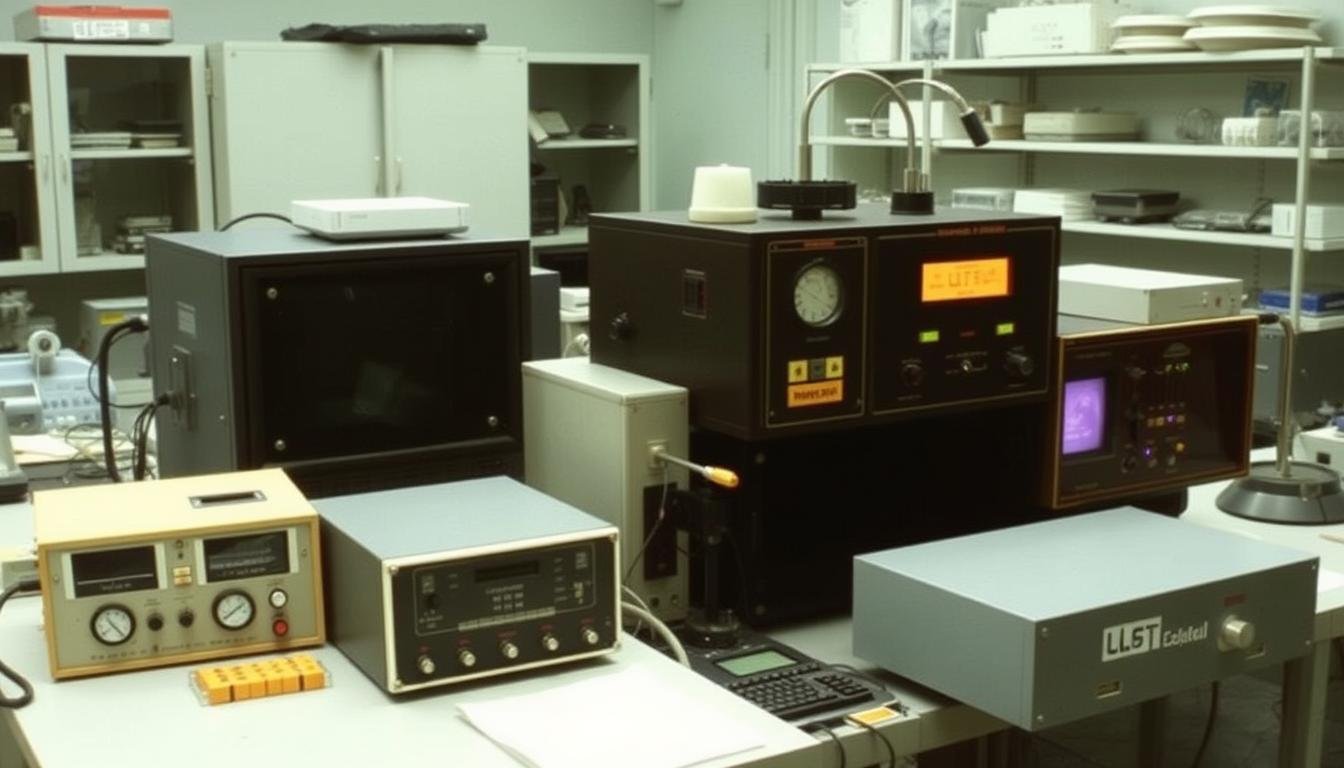
Early LLLT research equipment used during the pioneering studies of the 1970s-1980s
Key developments during this period included:
- Identification of optimal wavelengths (primarily in the red spectrum, 630-670 nm) that demonstrated biological effects
- Early theories about the cellular mechanisms, particularly focusing on mitochondrial stimulation
- Preliminary studies on tissue regeneration that would later inform hair restoration applications
- Development of the first generation of therapeutic laser devices, though not yet specifically for hair loss
The scientific community initially approached these findings with skepticism. Many dismissed the biological effects as mere heat responses rather than specific photochemical reactions. This skepticism, combined with limited technology and understanding of the precise mechanisms, meant that LLLT remained primarily experimental during this period.
However, these early years established crucial foundational knowledge about light-tissue interactions that would eventually lead to targeted applications for hair growth stimulation. Researchers began documenting that certain wavelengths could penetrate the skin to specific depths and influence cellular activity without causing damage – a critical distinction from high-powered surgical lasers.
Scientific Breakthrough: Understanding LLLT Mechanisms
The 1990s marked a turning point in LLLT research as scientists began unraveling the specific cellular mechanisms behind its effects. This decade saw the emergence of more sophisticated research techniques that allowed for detailed examination of how low-level laser light interacts with hair follicles.
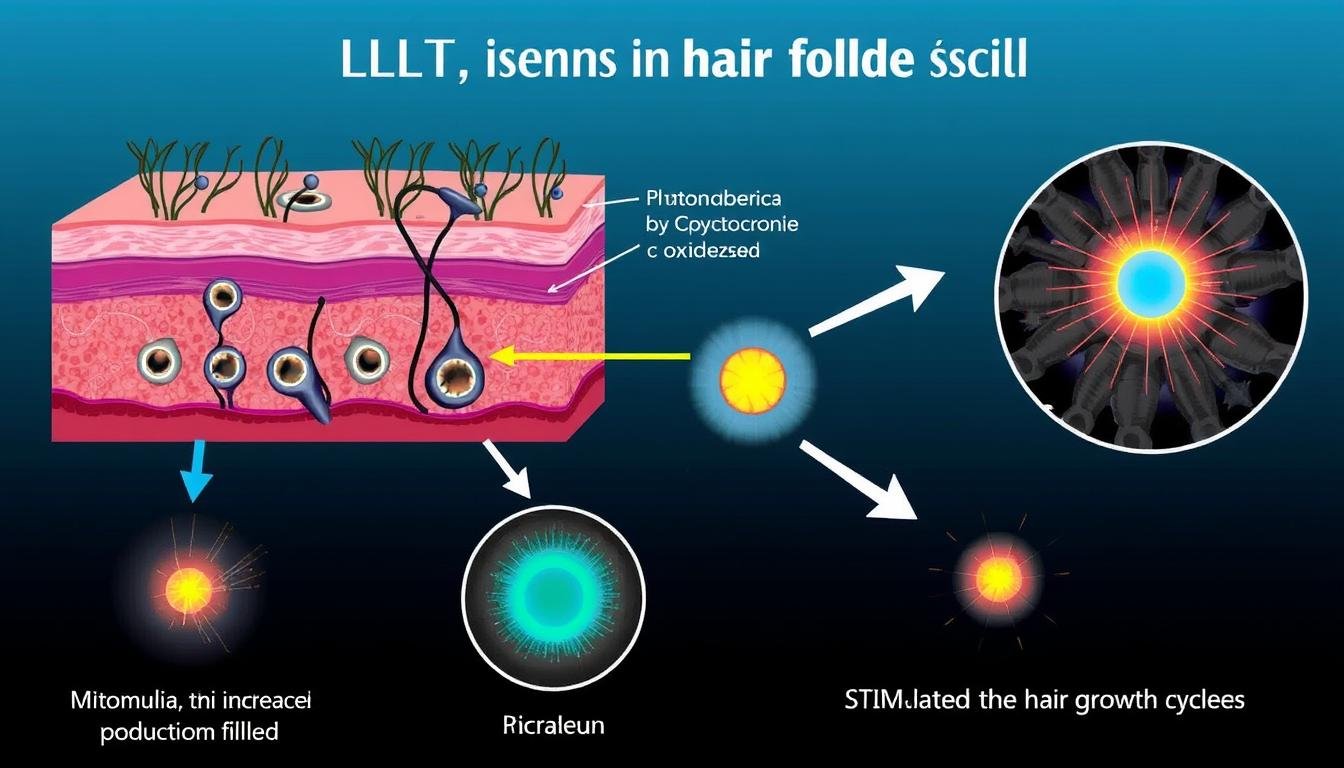
Diagram illustrating how LLLT affects hair follicle cells at the molecular level, stimulating growth
Key scientific discoveries during this period included:
Primary Cellular Mechanisms
- Identification of cytochrome c oxidase in mitochondria as the primary photoacceptor for red and near-infrared light
- Documentation of increased ATP production following LLLT exposure
- Evidence of enhanced cellular metabolism and protein synthesis
Hair-Specific Effects
- Demonstration that LLLT could shift hair follicles from telogen (resting) to anagen (growth) phase
- Observation of increased blood flow to the scalp after treatment
- Documentation of reduced inflammation around hair follicles
These scientific breakthroughs were crucial in establishing LLLT as more than just an interesting phenomenon – they provided the biological basis for its therapeutic potential in hair restoration. Researchers now understood that rather than simply warming tissues, low-level laser light was triggering specific photochemical reactions that could stimulate hair growth.
The growing body of evidence led to increased interest from both the medical community and commercial developers. By the late 1990s, the first specialized devices designed specifically for hair restoration began to emerge, though they remained primarily in clinical settings.
First Commercial LLLT Devices for Hair Loss (Late 1990s-2000s)
The late 1990s and early 2000s witnessed the transition of LLLT from experimental therapy to commercial application. This period saw the development and introduction of the first devices specifically designed to treat hair loss using low-level laser technology.

Early commercial LLLT devices for hair restoration from the early 2000s
Pioneering LLLT Products
The first generation of commercial LLLT hair restoration devices included:
Salon-Based Systems
Large, stationary units featuring overhead panels with multiple laser diodes. These expensive systems required in-person visits to specialized clinics for regular treatments, typically 2-3 times weekly.
The LaserComb
Introduced in the early 2000s, this handheld device became the first FDA-cleared LLLT product for hair loss (2007 for men, 2011 for women). Its innovative design combined laser diodes with a comb structure for direct scalp contact.
Early Helmet Designs
The first generation of helmet-style devices emerged, offering hands-free treatment but requiring connection to electrical outlets and featuring bulky, uncomfortable designs with limited coverage.
These early devices faced several challenges. They were often expensive, with salon treatments costing thousands of dollars annually and home devices priced at premium levels. The technology was also relatively primitive by today’s standards, with limited coverage, inconsistent energy delivery, and cumbersome designs that made regular use difficult.
Despite these limitations, the introduction of commercial LLLT devices represented a significant milestone in hair restoration history. For the first time, individuals had access to a non-pharmaceutical, non-surgical option for treating hair loss. This period also saw the beginning of regulatory oversight, as manufacturers sought to validate their products through clinical testing.
FDA Clearance and Clinical Validation
A crucial turning point in the history of LLLT for hair restoration came with regulatory recognition and clinical validation. The mid-2000s through the 2010s saw significant advancements in establishing LLLT as a legitimate medical treatment through rigorous scientific study and regulatory approval.
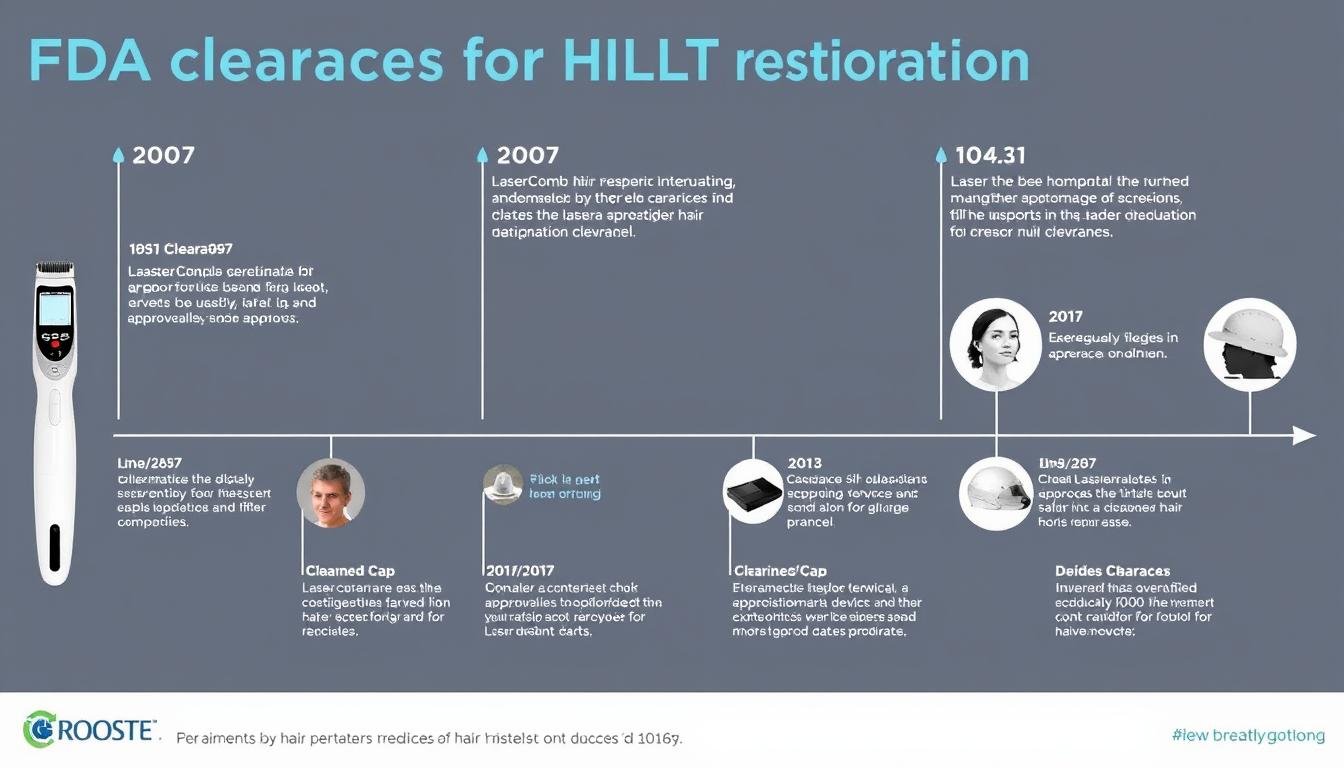
Timeline showing the progression of FDA clearances for LLLT hair restoration devices
Key Clinical Studies and Their Findings
The scientific validation of LLLT for hair restoration was established through several landmark studies:
| Year | Study | Participants | Key Findings |
| 2007 | Leavitt et al. | 110 males with androgenetic alopecia | Significant increase in terminal hair density compared to sham device |
| 2009 | Satino & Markou | 28 males and 7 females | 37% increase in hair count after 16 weeks of treatment |
| 2013 | Jimenez et al. | 146 males and 188 females | Significant improvements in hair density and overall hair regrowth |
| 2014 | Lanzafame et al. | 44 males | 35% increase in hair count compared to 6% in sham group |
| 2018 | Suchonwanit et al. | 40 patients | 51% increase in terminal hair counts; improved hair diameter |
These studies collectively established several important findings about LLLT for hair restoration:
- Efficacy for both male and female pattern hair loss
- Statistically significant improvements in hair count and density
- Enhanced hair shaft diameter in treated areas
- Minimal side effects, primarily limited to occasional scalp irritation
- Effectiveness as both a standalone treatment and complementary therapy
The accumulation of clinical evidence led to broader acceptance of LLLT within the medical community and increased consumer confidence in the technology. This period also saw expanded FDA clearances for various device types and applications, further legitimizing LLLT as a recognized treatment option.
Technological Evolution of LLLT Devices
The past two decades have witnessed remarkable technological advancements in LLLT devices for hair restoration. What began as bulky, expensive, clinic-based systems has evolved into a diverse ecosystem of sophisticated, user-friendly devices for both professional and home use.
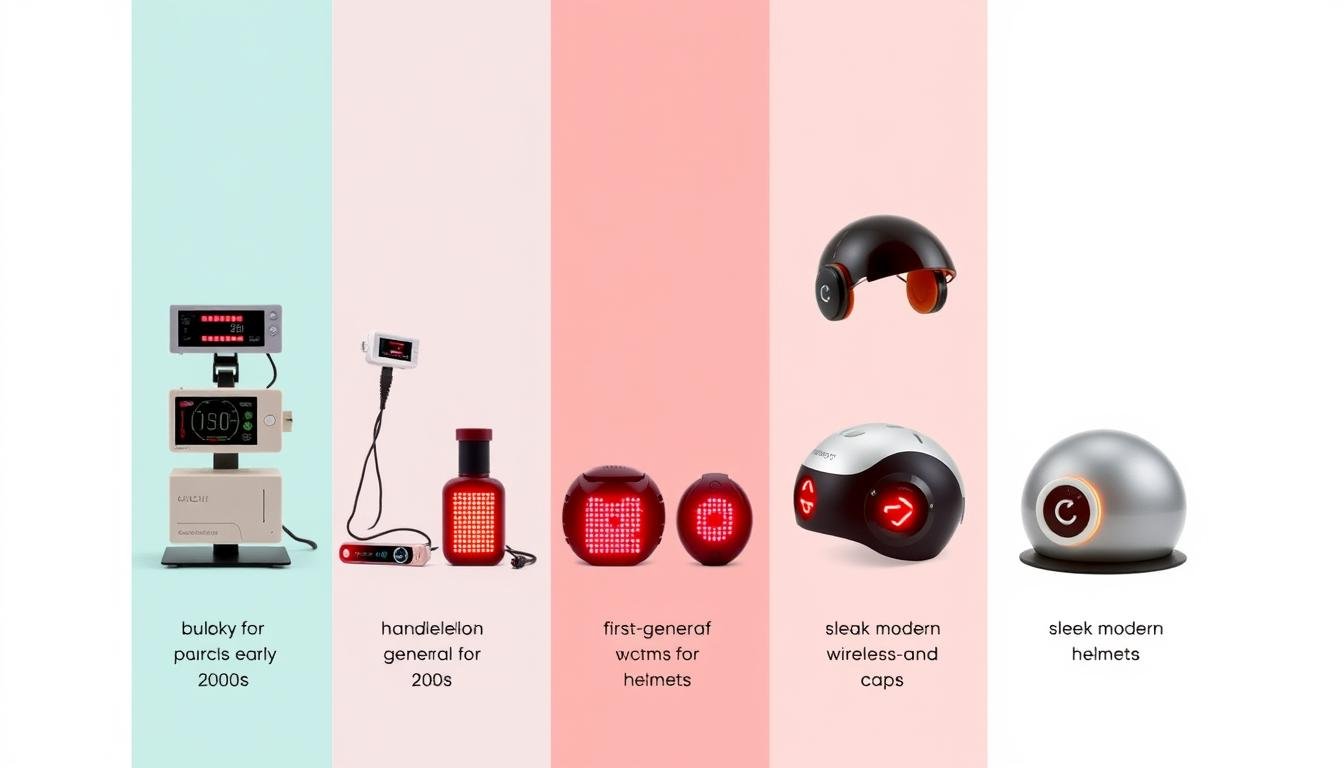
The evolution of LLLT devices from early models to modern sophisticated systems
Key Technological Improvements
Laser Diode Advancements
Modern devices feature improved laser diodes with precise wavelength control (typically 630-670 nm), optimal power output (5-20 mW per diode), and better energy efficiency. These advancements ensure more effective treatment with consistent light delivery.
Form Factor Innovation
The evolution from stationary salon systems to diverse form factors including combs, caps, helmets, bands, and full-coverage hoods has dramatically improved treatment convenience and compliance. Wireless, rechargeable designs have made home treatment practical.
Coverage & Uniformity
Contemporary devices feature optimized diode placement for complete scalp coverage, ensuring uniform light distribution to all affected areas. Advanced designs incorporate hundreds of diodes compared to dozens in early models.
Treatment Efficiency
Treatment times have decreased from 20-30 minutes to as little as 6-10 minutes per session with more powerful, efficient systems. Automated timing features ensure consistent dosing without user monitoring.
Smart Features
The latest generation of devices incorporates smart technology including treatment tracking apps, customized programs, and usage monitoring. Some systems adjust treatment parameters based on individual response patterns.
Combination Therapies
Modern devices increasingly combine multiple wavelengths or therapeutic modalities, such as red light with near-infrared or additional technologies like scalp massage, to enhance overall efficacy.
These technological advancements have dramatically improved the user experience, treatment consistency, and ultimately, the effectiveness of LLLT for hair restoration. The evolution from specialized clinic treatments to convenient home use has made this therapy accessible to millions of people worldwide.
MAIKONG: Leading Innovation in Modern LLLT Technology
As the history of LLLT continues to unfold, MAIKONG has emerged as a pioneer in advancing this technology to new levels of effectiveness, convenience, and affordability. Building on decades of scientific research and technological development, MAIKONG has created a comprehensive ecosystem of cutting-edge LLLT devices specifically designed for optimal hair restoration results.

MAIKONG’s comprehensive lineup of advanced LLLT devices for hair restoration
MAIKONG’s Innovative LLLT Product Range
LLLT Laser Therapy Devices
MAIKONG’s flagship laser therapy devices feature precisely calibrated diodes delivering optimal wavelengths for maximum follicle stimulation. These professional-grade systems incorporate the latest advancements in laser technology while maintaining exceptional value.
Red Light Therapy Beds
For comprehensive treatment, MAIKONG’s red light therapy beds provide full-body coverage with carefully engineered light panels. These systems deliver consistent, uniform light distribution for both clinical and high-end home use.
LLLT Clothing Devices
Revolutionary wearable technology allows for treatment while maintaining normal daily activities. These flexible, comfortable devices conform to the scalp while delivering precise light therapy through innovative fabric-integrated systems.
LLLT Helmets & Caps
MAIKONG’s ergonomically designed helmets and caps provide hands-free convenience with comprehensive coverage. Advanced features include adjustable fit systems, preset treatment programs, and rechargeable battery operation.
LLLT Home Devices
Specially engineered for convenient home use, these devices deliver professional-quality treatment in compact, user-friendly designs. Intuitive controls and automated programs ensure optimal results with minimal effort.
LLLT Combs & Masks
Targeted treatment options include precision combs for direct scalp contact and contoured masks for specific treatment areas. These versatile tools complement comprehensive systems for enhanced results.
Experience MAIKONG’s Advanced LLLT Technology
Discover why professionals and consumers worldwide choose MAIKONG for superior hair restoration results. Our devices combine cutting-edge technology with exceptional value, backed by scientific research and rigorous quality standards.
Modern Clinical Applications and Treatment Protocols
As LLLT has gained scientific validation and wider acceptance, standardized clinical applications and treatment protocols have emerged. Today’s approach to LLLT for hair restoration is characterized by evidence-based parameters and personalized treatment plans.

Professional clinical LLLT treatment session for hair restoration
Established Treatment Parameters
| Parameter | Optimal Range | Clinical Significance |
| Wavelength | 630-670 nm (red spectrum) | Ideal penetration depth for reaching hair follicles; optimal absorption by cytochrome c oxidase |
| Power Density | 3-5 mW/cm² | Sufficient energy for biological stimulation without thermal damage |
| Treatment Duration | 6-15 minutes per session | Balances adequate energy delivery with practical time commitment |
| Treatment Frequency | 3-7 sessions per week | Maintains consistent stimulation of hair growth cycle |
| Course Length | 16-26 weeks initial; maintenance thereafter | Aligns with hair growth cycle phases; allows for visible results |
Clinical Integration of LLLT
Modern hair restoration specialists typically employ LLLT in one of three clinical approaches:
Standalone Therapy
For mild to moderate androgenetic alopecia, particularly in early stages, LLLT alone may provide sufficient results. This approach is often preferred by patients seeking non-pharmaceutical interventions with minimal side effects.
Combination Therapy
LLLT is frequently combined with topical minoxidil, oral finasteride, or both for enhanced results. Studies show synergistic effects when these treatments are used together, with LLLT potentially enhancing drug absorption.
Procedural Complement
Following hair transplantation, LLLT is increasingly used to accelerate healing, reduce inflammation, and enhance graft survival. It also helps stimulate existing hair surrounding transplanted areas.
The clinical approach continues to evolve as research identifies optimal parameters for specific patient populations. Factors such as hair loss pattern, stage, gender, age, and hair characteristics now inform personalized treatment protocols, moving beyond the one-size-fits-all approach of early LLLT applications.
Future Directions and Emerging Research
The history of LLLT for hair restoration continues to unfold, with exciting developments on the horizon. Current research and technological trends point to several promising directions that may shape the next chapter in this evolving field.

Next-generation LLLT research exploring advanced hair restoration technologies
Emerging Trends in LLLT Research
Wavelength Optimization
Research is exploring the potential benefits of combining multiple wavelengths, including near-infrared (800-850 nm) with traditional red light. Early studies suggest this approach may enhance penetration depth and cellular response.
Pulsing Protocols
Investigations into pulsed light delivery versus continuous wave application show promising results. Specific pulsing patterns may enhance cellular response while reducing treatment time and energy requirements.
Personalized Parameters
Advanced diagnostic tools are enabling treatment customization based on individual factors such as hair color, skin tone, scalp thickness, and specific pattern of loss, moving beyond generic protocols.
Combination Therapies
Systematic research into synergistic effects of LLLT with other treatments is expanding, including novel combinations with platelet-rich plasma (PRP), exosome therapy, and emerging pharmaceuticals.
Mechanism Refinement
Deeper investigation into cellular and molecular mechanisms continues, with particular focus on stem cell activation, growth factor expression, and inflammatory pathway modulation in hair follicles.
AI Integration
Artificial intelligence is being incorporated into LLLT systems to analyze treatment response, optimize parameters in real-time, and predict individual outcomes based on comprehensive data analysis.
These research directions suggest that LLLT for hair restoration will continue to become more sophisticated, personalized, and effective. As our understanding of light-tissue interactions deepens and technology advances, we can anticipate even more significant innovations in this field.
The future of LLLT in hair restoration lies at the intersection of personalized medicine, advanced technology, and deeper scientific understanding. As this therapeutic approach continues to evolve, it promises to offer increasingly effective solutions for the millions affected by hair loss worldwide.
Conclusion: The Transformative Journey of LLLT in Hair Restoration
From its accidental discovery in a Hungarian laboratory to today’s sophisticated, FDA-cleared devices, the history of LLLT in hair restoration represents a remarkable journey of scientific advancement, technological innovation, and clinical validation. What began as an unexpected observation has evolved into a mainstream treatment option benefiting millions worldwide.
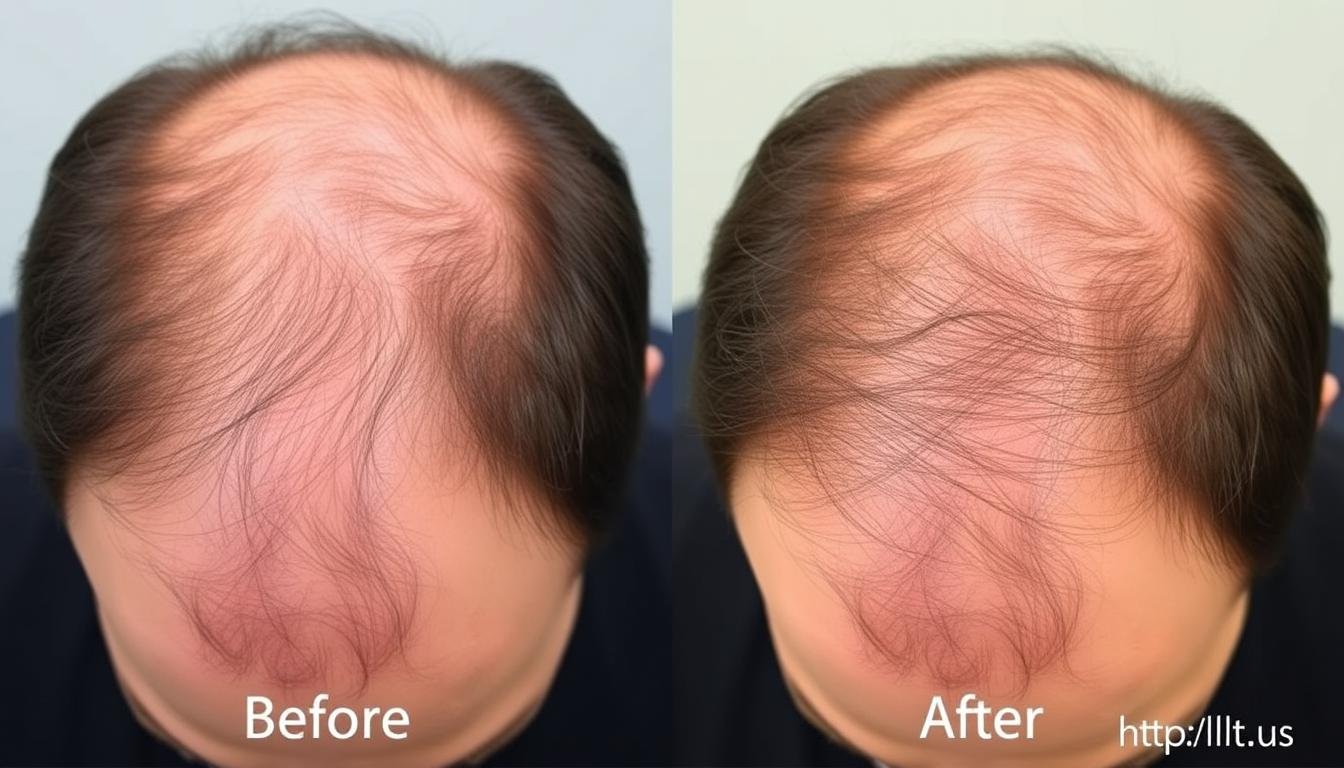
Before and after results demonstrating the effectiveness of LLLT hair restoration treatment
Key milestones in this transformative journey include:
- The serendipitous discovery of photobiomodulation effects on hair growth by Endre Mester in 1967
- Decades of scientific research uncovering the cellular mechanisms behind LLLT’s effectiveness
- Development of the first commercial devices specifically for hair restoration
- Rigorous clinical trials establishing safety and efficacy for both men and women
- FDA clearance legitimizing LLLT as a recognized treatment option
- Technological evolution from bulky clinic-based systems to convenient home devices
- Integration into mainstream hair restoration protocols alongside traditional treatments
Today, LLLT stands as a scientifically validated, non-invasive option in the hair restoration toolkit. Its unique advantages – minimal side effects, compatibility with other treatments, and convenience of use – have secured its place in both clinical practice and home care regimens.
As we look to the future, ongoing research and technological innovation promise to further enhance the effectiveness and accessibility of LLLT for hair restoration. With companies like MAIKONG leading the way in developing advanced, affordable devices, this therapeutic approach will continue to evolve and improve the lives of those affected by hair loss.
Experience the Latest in LLLT Technology with MAIKONG
MAIKONG offers a complete range of high-performance, cost-effective LLLT devices for both professional and home use. Our products combine cutting-edge technology with exceptional value, making advanced hair restoration accessible to everyone.
Visit Our WebsiteExplore our complete product lineup and find the perfect solution for your needs.
Contact Us on WhatsAppDirect line: 8613-51090-74-01
Email: Lucy@lllt.us
Copy©2025